Historical Archive · 1920 – present
Timeline of the Life of Sun Myung Moon and Hak Ja Han Moon
A day-by-day record of the lives of Sun Myung Moon and Hak Ja Han Moon, from his birth in Jeongju in 1920 to the present day. Every entry carries its date, its place where one is known, and its type — rallies and blessing ceremonies, imprisonments, world tours, and Hoon Dok Hae.
- Events
- 7,498
- Years covered
- 1920–2025
- Event types
- 28
- Busiest decade
- 2000s
Event type
Region
On this day
Explore by decade
Activity across the years
View events per decade as a table
| Decade | Events | Share |
|---|---|---|
| 1920s | 2 | 0.0% |
| 1930s | 7 | 0.1% |
| 1940s | 38 | 0.5% |
| 1950s | 269 | 3.6% |
| 1960s | 775 | 10.3% |
| 1970s | 998 | 13.3% |
| 1980s | 791 | 10.5% |
| 1990s | 1,199 | 16.0% |
| 2000s | 2,362 | 31.5% |
| 2010s | 752 | 10.0% |
| 2020s | 305 | 4.1% |
Where True Parents lived and ministered, 1920–2025
4,936 located events across 279 sites worldwide, 1920–2025. Marker size ∝ event count for the active filters. Combine decade and type to explore.
Decade
Type
Map will load when scrolled into view…
Evolution of event types, 1920s–2020s
Stacked counts per decade for the ten most common life-event categories. Hover any band to read its decade share.
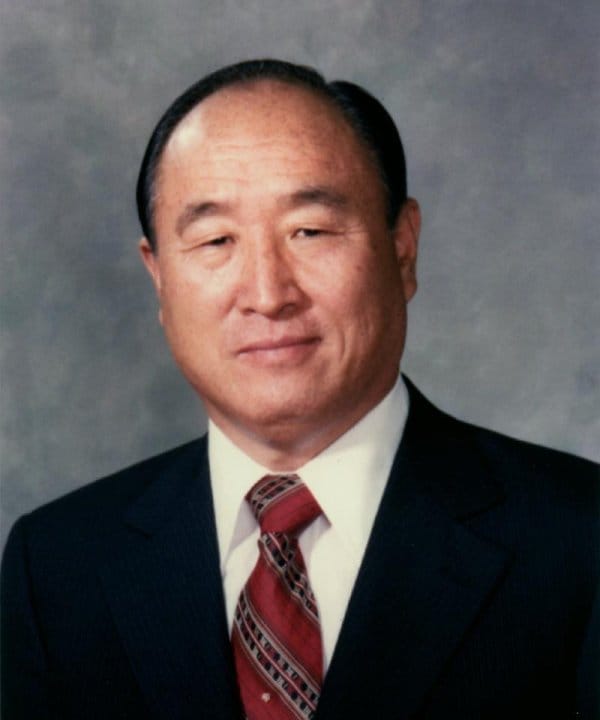
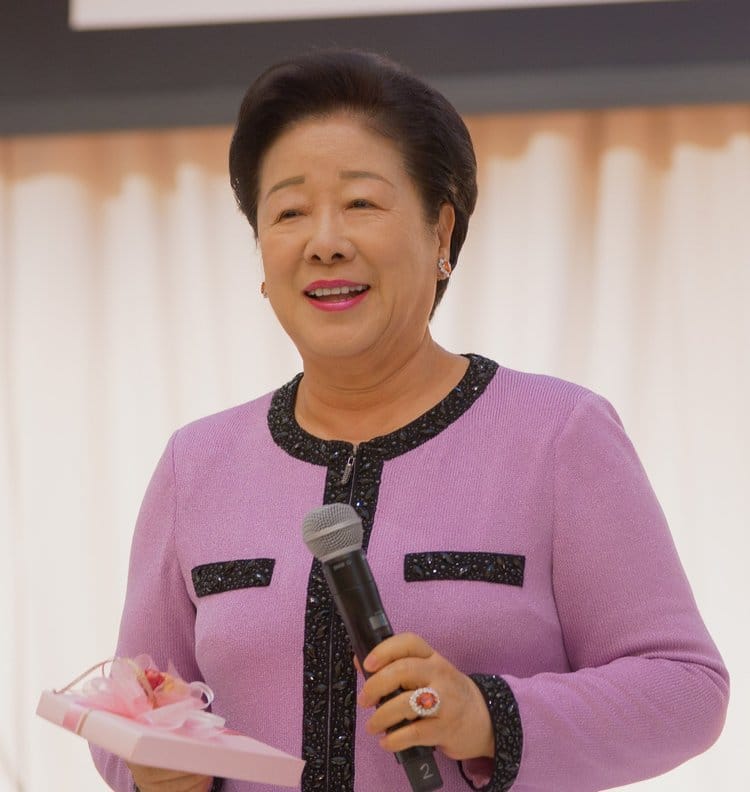
Founders
The voices behind the archive
Popular queries
Start exploring
How it works
Questions about their lives
He was convicted in 1982 of filing false federal income tax returns and of conspiracy. The case centred on roughly $150,000 held in a Chase Manhattan account and on Tong Il Enterprises stock; the government argued the assets were his personal income, while he maintained they were church funds held in his name because the movement had no legal standing to hold them at the time. A jury in the Southern District of New York convicted him on 18 May 1982. After his appeals failed and the Supreme Court declined to hear the case, he entered the federal correctional institution at Danbury, Connecticut, on 20 July 1984 and was released on 20 August 1985, having served thirteen months of an eighteen-month sentence. The prosecution drew protest from religious bodies and civil-liberties organisations that did not share his theology but regarded the case as a church-state question. He continued to teach from prison; this archive records ten events at Danbury.
He taught that the mission left unfinished at the cross would be completed by a man born on earth, and from the early 1990s he affirmed publicly that he and Hak Ja Han Moon were fulfilling that mission. The movement's own term for this is not "Messiah" in the popular sense but True Parents — a couple who reach maturity without falling and re-establish the parent–child relationship between God and humanity. The Divine Principle sets out the reasoning: that salvation is completed in the family rather than in the individual, and therefore requires both a man and a woman. In his earlier decades he spoke of this indirectly, letting followers draw the conclusion; the explicit declarations belong to the 1990s and 2000s. Christian churches reject the claim, holding that Christ's work was finished at the cross — a disagreement he addressed directly and repeatedly rather than avoiding.
Because the movement teaches that the Fall severed humanity's lineage from God, and that the remedy is a marriage engrafted back into it. The Holy Wine Ceremony at the heart of the Blessing is understood to accomplish that change; the wedding itself is a sacrament rather than a celebration. Scale followed logic: if the Blessing is meant for all people, it cannot be reserved for a few. The first was given to three couples on 16 April 1960, followed by 36 couples in 1961, then 72, 124, 430, 777, 1,800 and 6,000, then 360,000 couples linked by satellite in 1995 and 3.6 million in 1997. Couples were frequently matched across nationality and race deliberately, as a form of reconciliation between historically hostile peoples. The press called them mass weddings; participants described entering a covenant.
He founded it. The paper's first edition appeared on 17 May 1982, published by News World Communications, a company he had established in 1976 to run The News World in New York. His stated purpose was to provide a conservative daily in the American capital and to counter what he saw as sympathetic coverage of communism in the Western press; the venture ran at a loss for decades, sustained by movement-affiliated funding. He served as founder and chairman rather than editor, and the newsroom was staffed largely by journalists who were not members — a separation the paper's editors defended publicly. Ownership has since moved between movement-affiliated entities, including a widely reported repurchase in 2010. The Washington Times remains the most visible of his media ventures, and the reason his name appears in political reporting far outside religious contexts.
The label took hold in the 1970s, when large numbers of young Westerners joined, moved into communal centres and broke with family expectations. Parents' groups organised, some hired people to seize and "deprogramme" adult members, and the nickname "Moonies" became standard in the press. Members answered that they had chosen freely, that they could leave at any time, and that the accusation described their families' shock rather than their own experience. The question was also examined academically: the British sociologist Eileen Barker spent years interviewing members and non-joiners and published The Making of a Moonie in 1984, concluding that recruits made informed decisions and that the brainwashing thesis was not supported by evidence. Scholars of religion now generally use "new religious movement" instead. The controversy has not ended — legal proceedings in Japan since 2022 are the most significant recent chapter — but the vocabulary of the 1970s no longer describes it accurately.
In late 1973 he issued a statement titled Forgive, Love, Unite, argued in full-page newspaper advertisements, calling on Americans not to destroy their president amid a crisis he read as a spiritual one. His reasoning was not that Nixon was innocent but that a nation which humiliated its own head of state while facing communist expansion would damage itself more than the scandal had. In July 1974 around a thousand members fasted for three days on the steps of the Capitol in support of that appeal. Nixon publicly thanked him and received him at the White House on 1 February 1974. The campaign made him nationally visible for the first time — and made him enemies, since it read to many Americans as a foreign religious leader intervening in a constitutional crisis. It also set the pattern for his later political engagement: he consistently treated anti-communism as a religious duty rather than a partisan position.
He was arrested in Pyongyang on 22 February 1948, tried, sentenced to five years, and sent that May to the special labour camp at Hungnam, attached to a fertiliser complex on the north-east coast. Prisoners loaded sacks of ammonium sulphate; the quotas, the cold and the chemical dust killed most inmates within two or three years. Accounts from fellow prisoners describe him working out how to meet quotas efficiently, giving away part of his ration, sleeping little, and never explaining who he was until men asked. He was released on 14 October 1950, when United Nations forces advancing north reached the area and the camp was abandoned — he had been held two years and eight months. Rather than leave immediately, he waited nearby for followers who might come looking for him. This archive records nineteen events at Hungnam, and he returned to the theme in sermons for the rest of his life.
On foot, in winter, carrying a man who could not walk. When Chinese forces pushed the front back south in December 1950, he left Pyongyang with two followers: Won Pil Kim, and Pak Jung Hwa, whose leg was broken. He built a makeshift bicycle carrier for Pak and pushed him much of the way. The three crossed the 38th parallel and reached Seoul, then continued south as the capital fell again, arriving in Busan on 27 January 1951 after roughly 600 kilometres. In the summer of 1951, in the Beommil-dong district, he and Won Pil Kim built a hut from mud, stones and flattened ration boxes on a hillside above the harbour — the first church building of the movement in the South. There, between May 1951 and May 1952, he wrote Wolli Wonbon, the original manuscript of the Divine Principle. The archive records sixty-three events in Busan.
On 18 September 1976 he addressed a crowd on the National Mall in Washington, in what remains the largest public event of his career and the culmination of a two-year American campaign that had filled Madison Square Garden in 1974 and Yankee Stadium on 1 June 1976. Organisers reported an audience of around 300,000; press estimates that day were lower, and no independent count exists — a discrepancy worth stating plainly. His speech, God's Hope for America, argued that the United States had been prepared providentially and was squandering that inheritance through materialism and moral drift, and called for a spiritual awakening rather than political renewal. The rally marked both a peak and a turning point: it demonstrated the movement's organisational reach and simultaneously hardened opposition to it, and no comparable American event followed. See the 1970s in the timeline.
Fourteen children were born to them between 1960 and 1982. Three died before their parents: a daughter, Hye Jin, who lived only days in 1964; their second son, Heung Jin, who died in January 1984 at seventeen after a car accident in New York; and their son Young Jin, who died in 1999. Sun Myung Moon also had a son, Sung Jin, born in 1946 during an earlier marriage that did not survive his years in the North. The family's losses became part of the movement's calendar rather than being kept private: the day after Heung Jin's death was designated the Day of Victory of Love, on the teaching that a death met with love rather than resentment breaks a hold that resentment would preserve. Several of the surviving children have led organisations within the movement, and disagreements among them after 2012 produced lasting divisions.
She was seventeen. Born on 10 February 1943 in Anju, in what is now North Korea, she married Sun Myung Moon on 11 April 1960 in Seoul, when he was forty. In Korea in 1960 this was legal and unremarkable — marriage in the late teens was ordinary, particularly for women, and the age of majority and marriage customs of the period differed sharply from present Western norms. She had been a student, and had been introduced to the movement through her mother, Hong Soon-ae, an early follower. The movement understands her youth providentially rather than incidentally: the Holy Wedding is held to require a bride prepared from birth for the role, and her subsequent sixty-five years of public work — including leadership of the entire movement after 2012 — are read as the fulfilment of that preparation. Critics have raised the question repeatedly; the facts are as stated.
Hak Ja Han Moon has led the Family Federation for World Peace and Unification since her husband's death on 3 September 2012, and is addressed within the movement as True Mother. Under her leadership the movement inaugurated Cheon Il Guk on Foundation Day in January 2013, completed and canonised its three volumes of holy scripture, and shifted its administrative centre to Cheongpyeong, north-east of Seoul — a move visible in this archive, which records fifty-nine Cheongpyeong events in the 2020s alone. Her tenure has also seen the movement divide. Two of her sons lead separate bodies: Hyun Jin Moon heads the Global Peace Foundation, and Hyung Jin Moon founded a separate church in Pennsylvania in 2015. Because she is now in her eighties, questions of succession are openly discussed. Readers should check current reporting, as this is the one answer here that can change.
About this timeline
Key milestones from 1920 to the present — births, holy weddings, founding of organizations, world tours, speeches, imprisonments, blessing ceremonies, and significant proclamations in the lives of Sun Myung Moon and Hak Ja Han Moon.
Most dates follow the Gregorian (solar) calendar. However, many significant events were originally observed according to the lunar calendar — particularly birthdays, holy days, and blessings. Where a lunar date is historically significant, it is displayed alongside the solar date as LC: (Lunar Calendar). For example, Sun Myung Moon's solar birthday is January 6, 1920, while his lunar birthday falls on February 25 of that year.
Yes — every filter combination automatically generates a unique URL. For example, filtering by Blessing Ceremonies in Korea during the 1960s produces a shareable link that anyone can open to see exactly that selection. You can copy the URL directly from your browser's address bar, bookmark specific views, or link to them from other pages.
The timeline is updated on a rolling basis as new historical research is completed and verified by the editorial team. Priority is given to filling gaps in decades with fewer documented events, adding lunar calendar dates, and expanding notes with contextual information. If you notice a missing event or an error, you are welcome to contact the team via the site's feedback form.
Events are compiled from primary and secondary sources: official Unification Movement publications including Chambumo Gyeong and historical volumes of the Collected Speeches of Rev. Moon, verified news archives, academic research on new religious movements, and institutional records of the Family Federation for World Peace and Unification. All dates and locations are cross-referenced where possible. See the Editorial Methodology page for full details.
Loading timeline…